
The Truth of the Taiji Diagram: Origins, Scientific Principles, and Cosmic Laws
The Taiji diagram, also known as the “Primordial Diagram” or the “Diagram of Heaven and Nature,” is one of the most mysterious symbols in ancient Chinese culture. Modern scientific research and animation analysis suggest that the Taiji diagram is not only a philosophical or aesthetic symbol but may also reflect the scientific principles of cosmic evolution.
This article systematically explores the Taiji diagram’s origins and versions, its relationship with cosmic radiation waves, and the principles of single-star and binary-star formation, helping readers understand the diagram from both scientific and philosophical perspectives.
1. Origins and Historical Versions of the Taiji Diagram
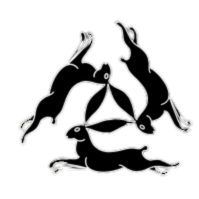
There are three main versions of the Taiji diagram:
-
Ancient Taiji Diagram
-
Lai’s Taiji Diagram
-
Modern Taiji Diagram
According to Chinese ancient legend, the Taiji diagram was created by the prehistoric sage Fuxi, who observed the evolution of all things in the universe and derived a pattern that symbolizes the laws of cosmic development. Research into the origins of the ancient Taiji diagram reveals that it is not only philosophically meaningful but also closely aligned with scientific principles of the universe.
2. The Taiji Diagram and Cosmic Radiation Waves
Animations show that when two sets of radiation waves—red waves from the Milky Way’s central black hole and yellow waves from the Sun—interfere in space, they form patterns strikingly similar to various historical versions of the Taiji diagram.
-
Adjusting the central position or the spacing between waves can reproduce the shapes of the ancient Taiji diagram, future Taiji diagram, and modern Taiji diagram.
-
The amplitude and wavelength of the waves directly affect the resulting cosmic pattern.
This suggests that the Taiji diagram may not be merely a philosophical symbol but also reflects the interference patterns of cosmic radiation waves.
3. The Taiji Diagram and Single-Star Formation
Animation analysis shows that Lai’s Taiji diagram explains the formation of single stars, such as the Sun, Earth, Mercury, and Venus.
-
Traditional theories attribute the rotation of celestial bodies to inertia, but observations show that rotational speeds fluctuate.
-
The video indicates that rotation and revolution of celestial bodies are caused by energy fluctuations in space, similar to a windmill rotating faster or slower depending on wind speed.
4. The Taiji Diagram and Binary-Star System Formation
The modern Taiji diagram reveals the formation principles of binary-star systems, such as Pluto and Charon, as well as other binary stars in the universe.
-
When two sets of waves with similar wavelengths, frequencies, and amplitudes interfere in a near-circular cavity, a single star is formed.
-
If the single star has a dual-core structure, it may explain the formation of celestial magnetic fields.
-
If the wave shapes differ slightly, the cavity becomes elliptical, eventually forming two independent celestial bodies—a binary-star system.
5. Radiation Wave Patterns and the Scientific Explanation of the Taiji Diagram
Radiation waves often appear centipede-like rather than simple curves:
-
Light originates from energy within atoms, pushing surrounding dark matter to form spherical waves.
-
Spherical waves interfere to form arc waves, which then stack to generate longitudinal wave series.
-
This is similar to observing a flying dragonfly from a distance: we see the body move, but the movement is driven by invisible wings.
Thus, the Taiji diagram may reflect wave interference patterns at atomic and cosmic levels.
6. Scientific Principles Behind the Taiji Diagram
The Taiji diagram is not merely a symbol of Yin and Yang philosophy; it also describes the scientific laws of cosmic evolution and the formation of all things, which explains why images captured by the Webb Telescope of extragalactic systems resemble the Taiji diagram.
-
The idea that Fuxi created the Taiji diagram simply by observing the heavens is unlikely.
-
Ancient civilizations before the great flood may have possessed advanced scientific knowledge, possibly surpassing modern understanding.
Conclusion: From Philosophy to Science
The Taiji diagram is not just a philosophical or mystical symbol; it is also:
-
A scientific model of cosmic evolution and celestial formation
-
A visual representation of wave interference and celestial motion
-
A bridge between ancient wisdom and modern science
Understanding the scientific principles behind the Taiji diagram allows for a new perspective that integrates ancient philosophy with modern cosmology.
Tags:
Previous
What Does Taiji Really Represent and Why Is It Continuously Referenced?
Next
2026 Fortune Outlook: In the Nine Purple Fire Period, Who Is Truly Beginning to Rise?